
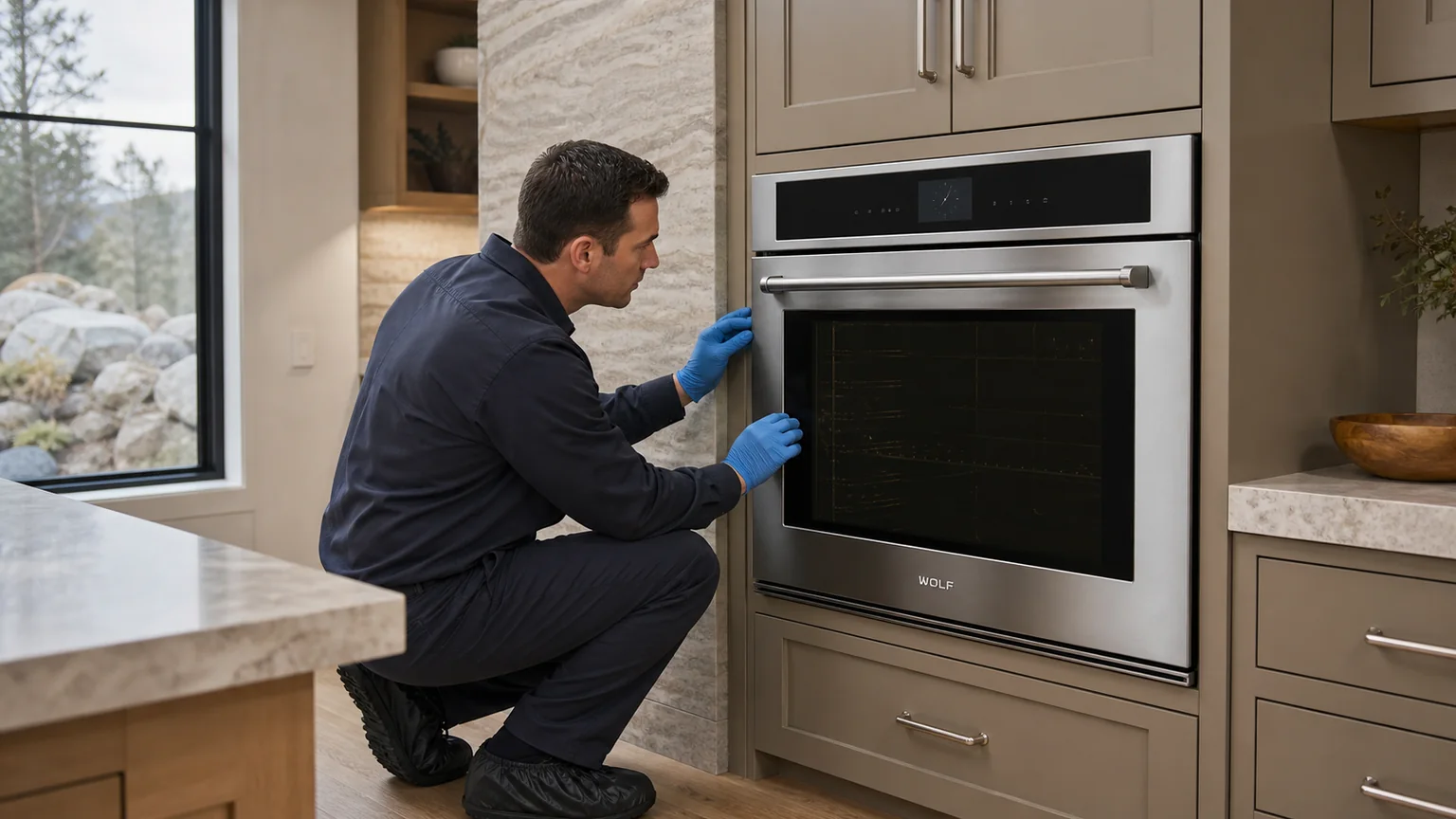
A Viking oven that will not come up to temperature is usually a single failed component, not a dead appliance. On a gas Viking oven the most common culprit is the bake igniter; on an electric or dual-fuel model it is the bake element or a relay; and on either, a temperature sensor reading wrong can make the control refuse to heat. Diagnosis is a matter of testing each in turn.
Gas Ovens: the Igniter
A gas Viking oven uses a glow-bar igniter that both lights the gas and, as it draws current, signals the safety valve to open. When that igniter weakens with age it may still glow but no longer draw enough current to open the valve, so the oven never lights even though the igniter looks lit. This is the single most common gas-oven no-heat cause, and it is a straightforward part.
Electric and Dual-Fuel: Element and Relay
On electric bake, a failed bake element often shows a visible break or blistering, but not always, so we meter it. A control relay that will not close will also keep the element from powering even when the element is good. A sensor that has drifted out of range can make the control shut heating down as a protection.
| Type | Likely Cause | What We Do |
|---|---|---|
| Gas oven, no heat | Weak bake igniter | Test igniter current draw, replace |
| Electric, no heat | Bake element or relay | Meter element and relay, replace failed part |
| Heats wrong or cuts out | Temperature sensor drift | Ohm-test sensor, recalibrate or replace |
| No power to oven | Control board or supply | Check power and control |
| Broil works, bake does not | Bake element or relay | Test the bake circuit specifically |
When to Call
Testing an igniter's current draw, metering an element, or checking a gas safety valve calls for a technician and the correct tools. Our Viking maintenance guide covers keeping the oven accurate, and our refrigeration guide covers Viking cooling.
Viking Oven Staying Cold?
Book a diagnosis. Diagnostic and travel fees, if applicable, are confirmed before the appointment and before repair approval.