
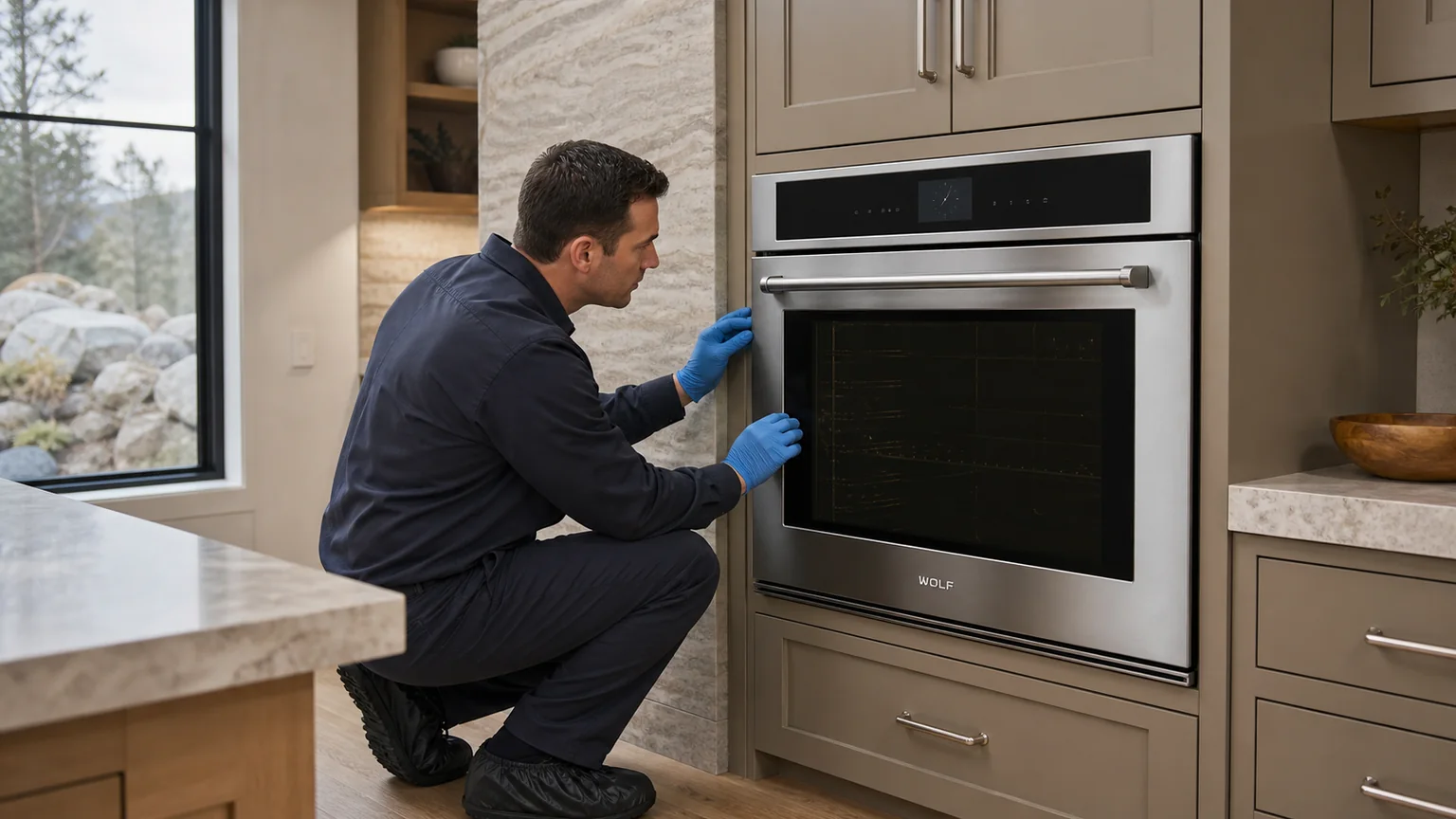
People search for Wolf oven error codes expecting a lookup table, but Wolf does not work quite like the GE-based brands. Rather than a long numbered fault list, a Wolf oven communicates through its display messages, behavior, and safety lockouts. Understanding that difference is the key to reading one correctly, so we diagnose by symptom and measurement.
How a Wolf Oven Signals a Fault
A Wolf oven that detects a problem may show a service or fault message, refuse to heat, lock the door, or hold at the wrong temperature. A control that senses an out-of-range temperature sensor, for example, will typically stop heating to protect the appliance rather than display a numbered code you can look up. That is a safety behavior, not a malfunction of the display.
Reading It by Symptom
| Behavior | Likely Cause | What We Do |
|---|---|---|
| Oven will not heat, no clear message | Bake element, relay, or sensor | Meter the element, relay, and sensor |
| Service or fault message on display | Control or sensor fault | Read the message, test the flagged system |
| Door locked and will not release | Self-clean lock or control fault | Release the lock, diagnose the control |
| Temperature drifts far off set | Sensor drift or calibration | Test sensor, recalibrate or replace |
| Panel unresponsive | Control board or power | Check power, test the control |
What to Try, and When to Call
A single power cycle at the breaker clears a transient glitch. If a fault message or no-heat condition returns, the flagged system, usually a sensor, bake element, relay, or the control, needs a meter. Our Wolf maintenance guide helps prevent avoidable faults, and our burner ignition guide covers the cooktop side.
Wolf Oven Showing a Fault?
Book a brand-focused diagnosis. Diagnostic and travel fees, if applicable, are confirmed before the appointment and before repair approval.