
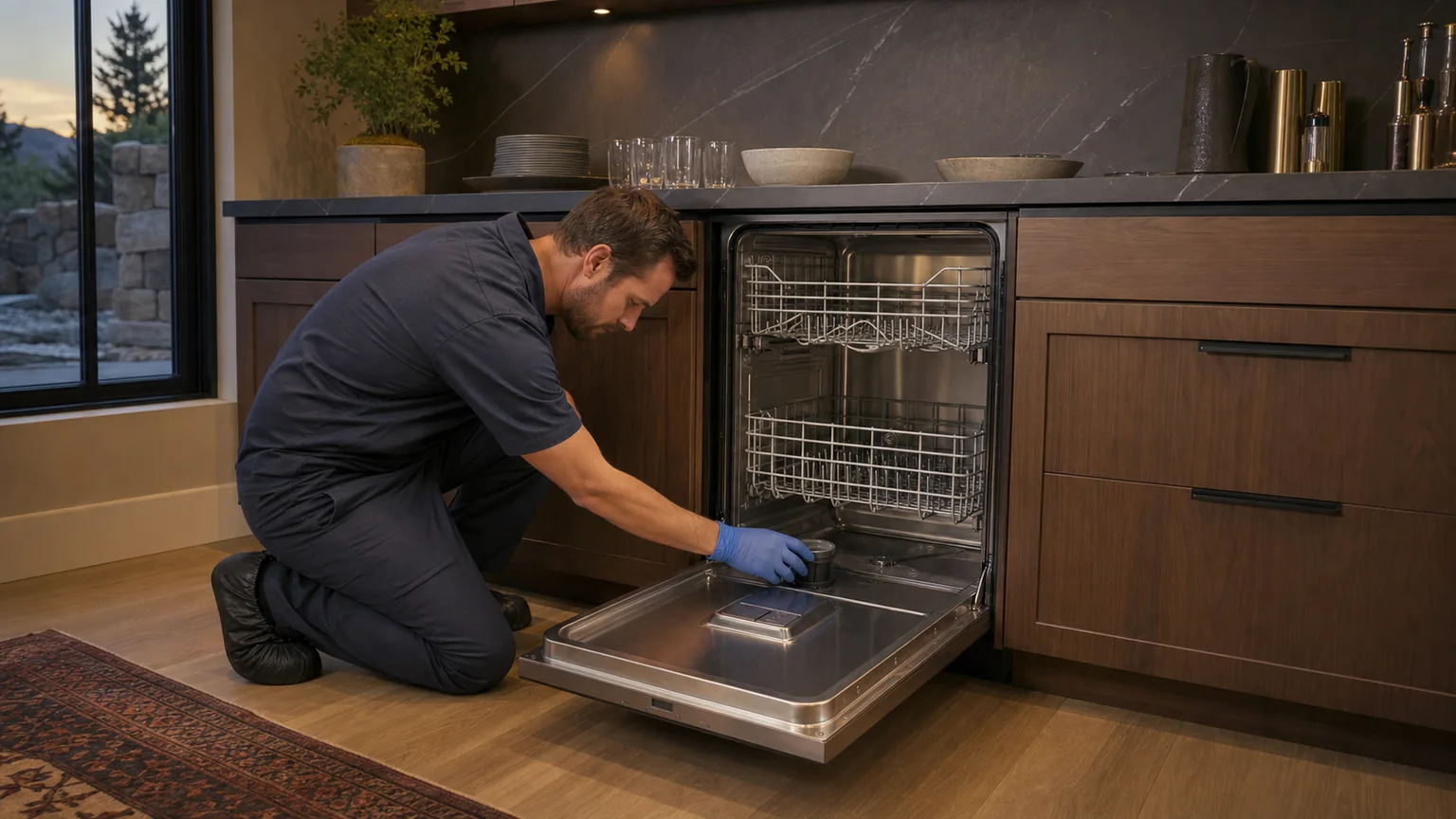
If your Cove is cleaning well but leaving dishes wet, the fix is often simpler than a repair. Cove uses condensation drying rather than an exposed heating element, and that method depends on two things you control: rinse aid and how the dishwasher is loaded. Understanding how it dries makes most wet-dish complaints easy to resolve.
How Cove Drying Works
Condensation drying works by letting hot water from the final rinse heat the dishes so that moisture evaporates and then condenses on the cooler stainless tub wall, where it drains away. Rinse aid is essential to this: it breaks the surface tension so water sheets off the dishes instead of clinging in droplets. Low or empty rinse aid is the number-one cause of a Cove that will not dry.
Loading and Materials
- Refill rinse aid and confirm the dispenser is set to release enough.
- Load with space between items so air can circulate and water can run off.
- Angle bowls and cups so water does not pool in their recesses.
- Expect plastics to stay wetter than glass and ceramic; they hold less heat, so condensation drying is less effective on them.
| Symptom | Likely Cause | Fix |
|---|---|---|
| All dishes wet | Low or empty rinse aid | Refill and set the dispenser |
| Water pooled in cups | Loading angle | Angle items so water runs off |
| Only plastics wet | Material, not a fault | Normal for condensation drying |
| Wet after every cycle with rinse aid | Heater or sensor fault | Have the drying system tested |
When to Call
If rinse aid is full, the dispenser is releasing it, and dishes are loaded with room to drain and they still come out wet every cycle, the final-rinse heating or a sensor may need testing. Our Cove maintenance guide covers rinse-aid and loading, and our not-draining guide covers standing water.
Cove Leaving Dishes Wet?
Book a diagnosis if rinse aid does not fix it. Diagnostic and travel fees, if applicable, are confirmed before the appointment and before repair approval.